
MorningTents produces custom event products through a project-based process. First, the buyer and supplier define the product, size, artwork, accessories, quantity and delivery needs. Next, the team reviews the artwork and starts the correct production route. It then checks the finished order against the approved details before packing and shipment. Because a canopy, inflatable arch and backdrop use different structures, each product needs its own production and inspection checklist.
For a B2B buyer, quality control starts before manufacturing. An approved brief and proof give production and inspection teams a reliable reference. This approach is more useful than relying on a broad promise of “high quality.”
1. MorningTents defines the project before production
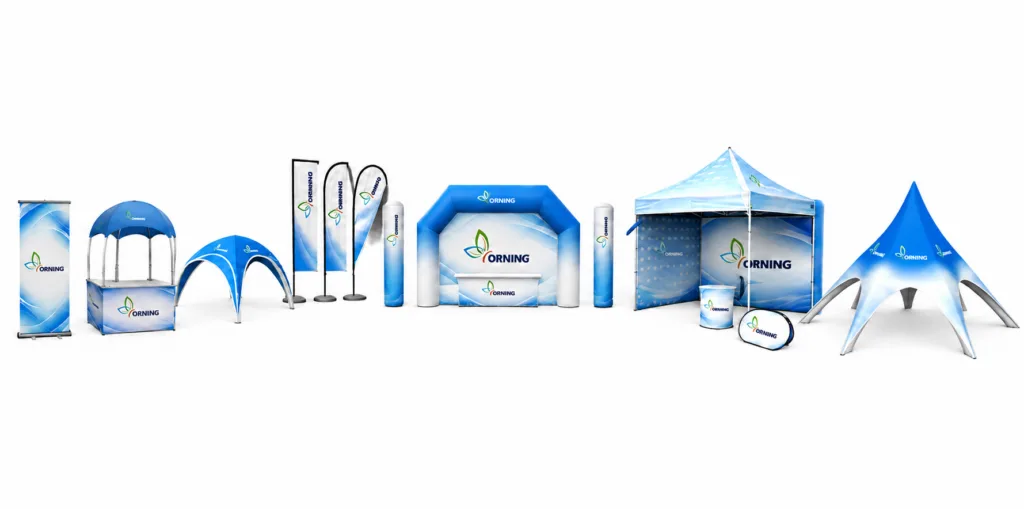
Every custom event product begins with its intended use. A buyer may need a branded shelter for a sports event, a food-service tent for an outdoor market or a coordinated display for a trade show. Although these projects all involve branded equipment, their practical requirements differ.
Therefore, a useful project brief should answer several questions:
- What product will be used?
- Where and how often will it be installed?
- What size and quantity are required?
- Which surfaces need printing?
- How many artwork versions are included?
- Which accessories must be packed with each unit?
- Where must the order be delivered?
- When must it arrive?
These details help the supplier recommend a suitable configuration. They also reduce missing items in the quotation. For example, a market vendor may need sidewalls, weights and serving access. In contrast, a sports organizer may care more about visibility, repeated setup and clear carton labels for several locations.
Buyers can first compare MorningTents’ custom tents and portable shelter solutions. Projects that need arches, inflatable tents or promotional shapes can review the custom inflatable event product range. This early category choice helps define the next technical and artwork decisions.
2. Specifications create the reference for production and inspection
A product name alone is not a complete specification. “Custom canopy tent,” for example, does not identify the model, size, printed panels, frame choice or included accessories. Those details should appear in the quotation or order record.
The following table shows the main areas that buyers should confirm:
| Decision area | Details to document before production |
|---|---|
| Product | Model, dimensions, structure and intended use |
| Printed surfaces | Roofs, walls, flags, covers, panels or inflatable sections |
| Artwork | Approved file, version, orientation and print coverage |
| Accessories | Bags, weights, bases, connectors, tools or spare parts |
| Quantity | Total units and quantity for each artwork version |
| Inspection | Required measurements, checks and evidence |
| Packing | Units per carton, labels and grouping instructions |
| Delivery | Destination, target arrival date and agreed shipping scope |
Clear specifications support both sides. Production teams know what to make, while buyers know what they approved. Later, inspectors can compare the finished order with the same record.
Buyers should connect every critical requirement to the exact product. This includes material, color reference, performance level and certification needs. A general website statement does not prove that every model meets the same requirement. Therefore, buyers should request product-specific confirmation when a property affects safety, compliance or purchasing approval.
3. Artwork approval turns a design into production instructions
Custom event products must work as physical equipment and branded communication. As a result, artwork approval involves more than checking whether a logo looks attractive on a screen.
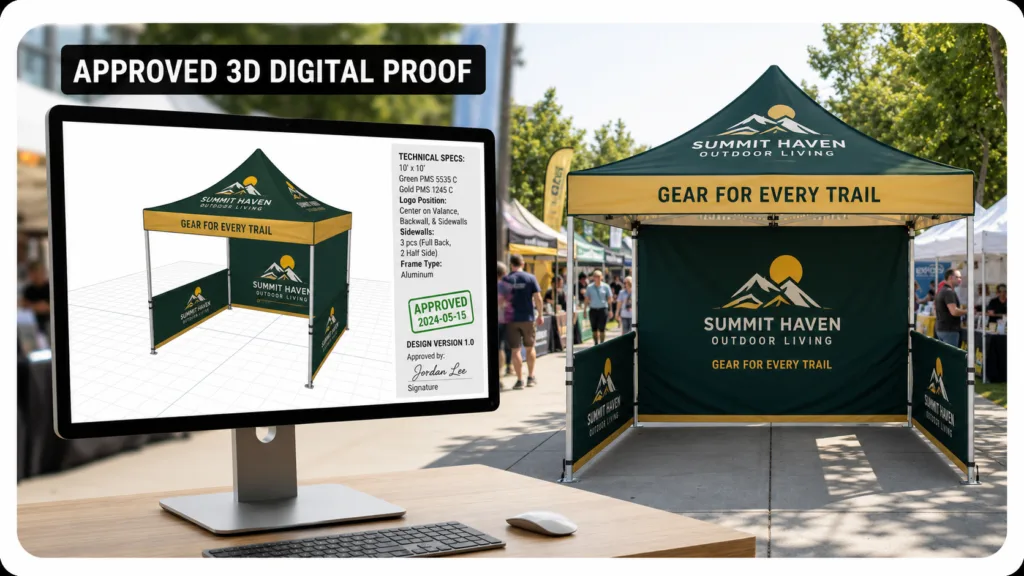
MorningTents states on its factory and company page that its graphic design team can prepare 2D and 3D proofs. Buyers who create their own designs can also work with product templates. These tools help both sides review the planned layout before printing.
Before approval, the buyer should check:
- the correct logo and file version;
- spelling, contact details and website addresses;
- logo size and placement on every visible surface;
- panel direction and the relationship between adjacent graphics;
- safe areas, seams and possible hardware positions; and
- the agreed color reference or approval method.
The final proof should have a clear version name or number. Otherwise, the team may mistake an older file for the approved design. In addition, the buyer should confirm who has authority to approve the proof.
A digital proof is useful for layout. However, it cannot guarantee that every screen and printed material will look identical. If brand color is critical, the buyer should discuss a practical color reference or sample approval method before full production.
4. Production follows the approved product type
MorningTents’ public factory information says that it prints canopy graphics in-house with 3.2-meter wide-format sublimation printers. It also describes specialized production equipment and a connected production chain. However, the manufacturing route changes by product category.
A printed shelter may require artwork preparation, fabric printing, cutting, sewing and frame or hardware preparation. The ordered roof, walls and accessories must then be brought together as one configuration. By comparison, an inflatable product has different construction, connection and function requirements. A backdrop, table cover or portable counter also follows its own finishing steps.
Therefore, buyers should ask a product-specific question: “Which production stages apply to this model and design?” That question is more useful than asking whether all products use one standard process.
Coordination also matters when several products form one event kit. MorningTents’ trade show display systems can complement shelters with branded table covers, banners, backdrops and counters. If these products share one campaign, the project team should manage their artwork versions, color references, quantities and packing groups together.
5. Inspection compares the finished product with approved details
An inspection plan should focus on requirements that inspectors can see, count, measure or test. The exact checkpoints depend on the product and agreement. Still, inspectors can review most custom event orders across several practical areas.
Product identity and quantity
The inspector can confirm the product model, size, order quantity and artwork version. If one order contains several designs, the inspector should count each version separately. Clear identification is especially important for multi-location campaigns.
Dimensions and structure
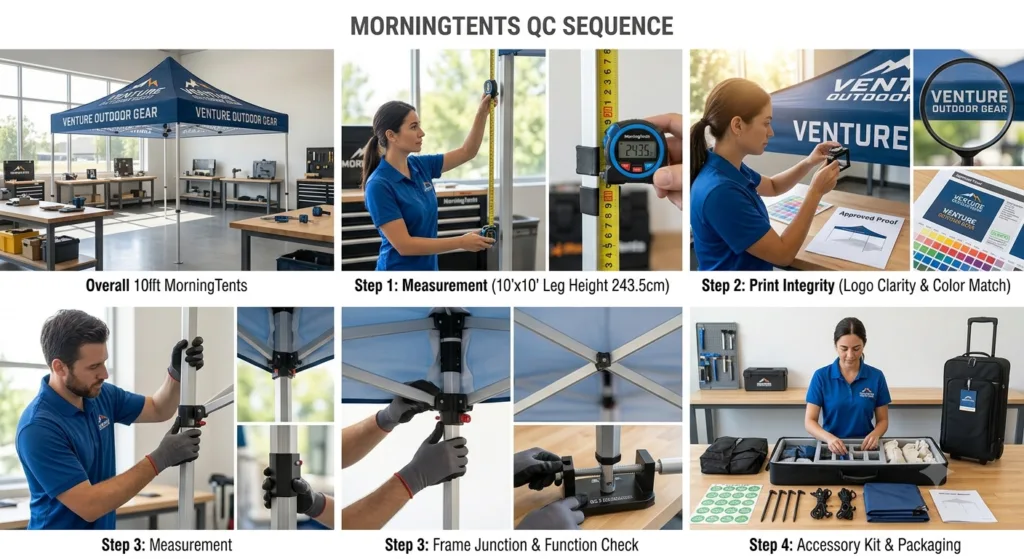
Inspectors can compare relevant dimensions with the approved specification. They can also review the ordered frame, support parts, connection points and hardware. If the product opens, closes, inflates or connects in a defined way, the agreed function check should reflect that use.
Printed graphics
Inspectors can compare printed surfaces with the approved proof. Key points may include artwork placement, orientation, visible text, panel sequence and print coverage. If both sides agreed on a color reference, they should also agree on the checking method.
Sewing and finishing
Depending on the product, inspection may cover seams, hems, fasteners, zippers, edges, attachment points and connectors. The goal is to check the finished configuration, not to apply one vague standard to every item.
Accessories and packing
Inspectors can count included bags, weights, bases, tools, connectors and spare parts before packing. They can also review carton quantities, protective packing, shipping marks and destination labels.
6. Inspection evidence helps remote B2B buyers
International buyers may not be able to visit the factory for every order. In that case, agreed inspection evidence can make the final review more practical.
Depending on the product and service scope, a buyer may request:
- overall photos of the completed product;
- close-ups of important printed and finished areas;
- measurement photos for agreed dimensions;
- photos or video of an applicable function check;
- images of accessories and quantities;
- packing photos and carton labels; and
- copies of applicable product-specific documents.
These records should be discussed before production. Not every order automatically includes the same evidence. Moreover, factory photos do not replace a formal third-party inspection when a contract requires one. A large or technically sensitive project may need a sample, pre-shipment inspection or independent inspection arrangement.
Buyers should also define how differences will be handled. The order record can state whom to contact, which evidence to provide and how shortages, damage or specification differences will be reviewed. A clear process supports faster decisions after delivery.
7. Packing and shipping complete the production plan
The production completion date is not the same as the required arrival date. Buyers should plan backward from the event date. The schedule may need time for proof approval, manufacturing, inspection, packing, international transport, customs procedures and local delivery.
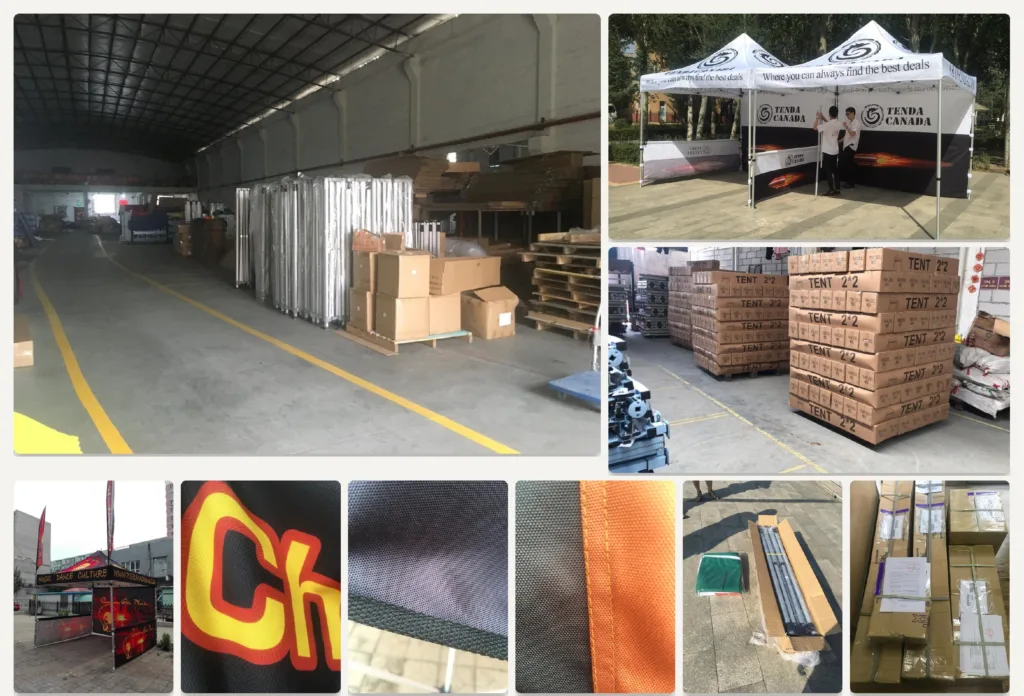
Packing affects usability as well as protection. For example, a campaign with ten destination stores is easier to distribute when each carton identifies its store, artwork version and included accessories. Without clear grouping, the products may arrive safely but still be difficult to deploy.
Before shipment, buyers should confirm:
- the packing method and units per carton;
- shipping marks and destination labels;
- how multi-product kits are grouped;
- the required shipping documents;
- the agreed logistics responsibilities; and
- the target delivery plan.
MorningTents states that it provides worldwide shipping support and several logistics options. The suitable choice will still depend on product dimensions, order quantity, destination and urgency.
Buyer checklist before approving shipment
Use this checklist as a starting point. Add any product-specific or contractual requirements before production begins.
- The model, size, quantity and design versions match the order.
- Printed surfaces match the approved artwork proof.
- Required dimensions and structure were checked.
- Agreed function checks were completed.
- Accessories and spare parts were counted.
- Requested inspection evidence is available.
- Cartons are grouped and labeled correctly.
- Required product documents are included.
- Shipping details and responsibilities are confirmed.
- The process for reporting shortages or damage is understood.
Frequently asked questions
How does MorningTents start a custom event product order?
The process starts with the intended use, product type, size, quantity, artwork, accessories, destination and required arrival date. A complete brief helps MorningTents define the configuration and quotation.
Can buyers review artwork before production?
MorningTents states that its graphic design team can prepare 2D and 3D proofs. Buyers should approve the final file, printed surfaces, visible text, orientation and any agreed color reference before production.
Does every MorningTents product use the same inspection checklist?
No. Tents, inflatables and portable displays use different structures and production methods. Therefore, the inspection points should match the exact model, design, accessories and order requirements.
Can buyers request photos or video before shipment?
Buyers may request order-specific inspection evidence. However, the exact photos, measurements, videos or packing records should be agreed before production because the available service scope may vary.
How should buyers verify a certification or performance claim?
Request evidence for the exact product, material and requirement. Review the document scope, test method, result, issuer and validity where relevant. Do not assume that a general claim applies to every model.
Discuss your custom event product requirements
A clear inquiry does not need to be highly technical. Start with the intended use, product category, size, quantity, artwork status, destination and target arrival date. Then add any required accessories, packing instructions, documents and inspection evidence.
To discuss a project, request a project-specific quotation from MorningTents.